7 Common Pilates Mistakes and How to Correct Them
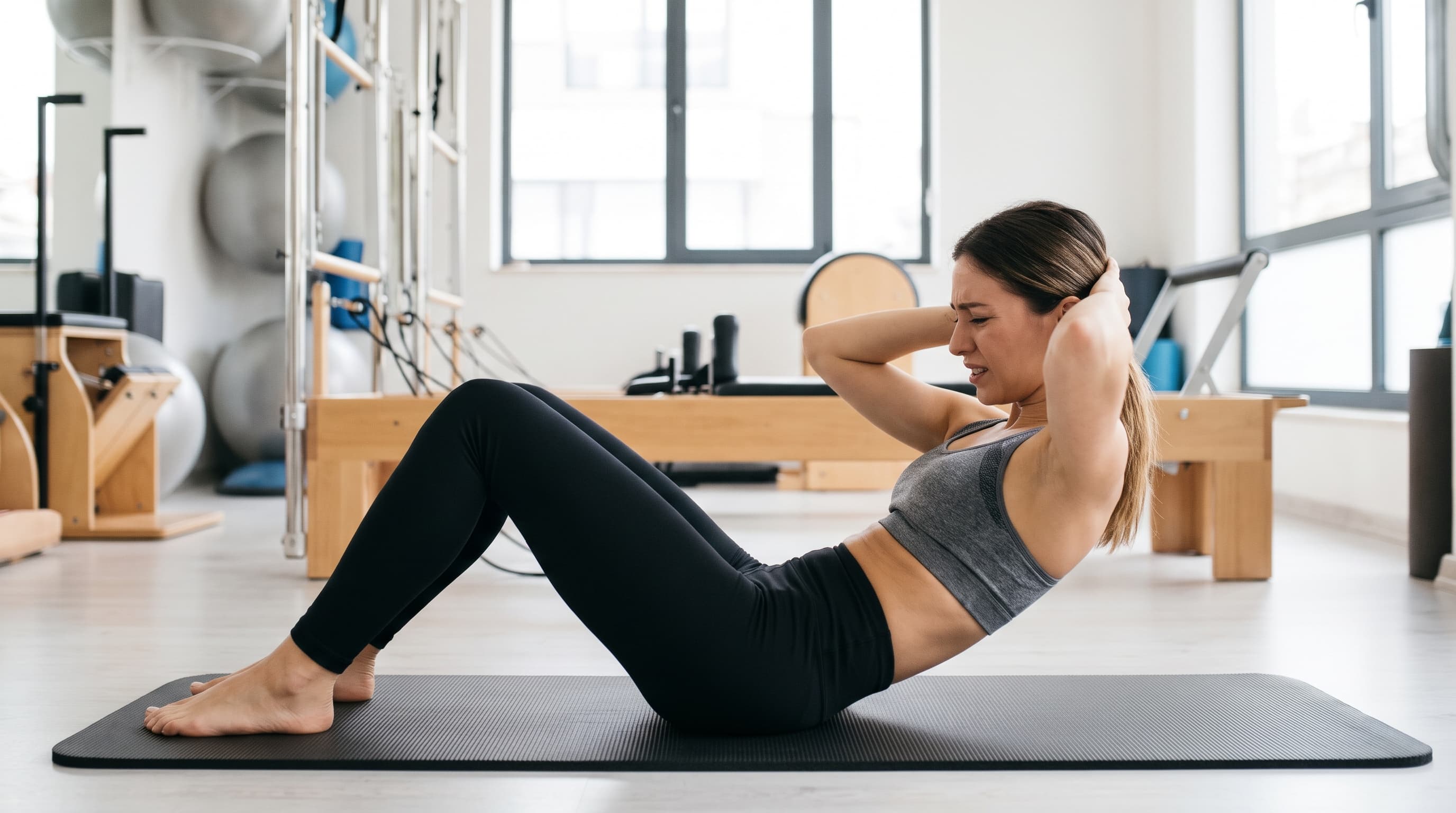
Pilates can look calm and easy from the outside, but its effect depends largely on how each movement is performed. With a small change in form, the same exercise can tire the neck or lower back instead of working the target muscles. Below are the most common Pilates mistakes and how to correct them.
1. Holding Your Breath
Unconsciously holding your breath during the hard part of a movement is one of the most common mistakes. It can create tension in the neck and shoulders and interrupt the flow of the exercise.
The correction: Direct each breath through your nose so that your ribs expand sideways and toward your back. Exhale slowly during the most demanding part of the movement. Your instructor may suggest a different breathing rhythm for certain exercises.
2. Moving Too Fast
Speeding up to reach a certain number of repetitions leaves part of the work to momentum instead of your muscles. On the reformer, the same mistake shows up as the moving carriage snapping back under the pull of the springs.
The correction: Keep the same control on the way out and on the way back. Aim to return the carriage to its starting point quietly. A few repetitions with good form are worth more than many fast ones.
3. Not Engaging Your Core
When the strong center at the heart of Pilates is not working, the load often shifts to the lower back and the front of the hips. Pulling your stomach in hard is not the answer either, because it restricts your breathing.
The correction: Gently engage your abdominal and pelvic floor muscles before you begin the movement. Instead of forcing your lower back into the mat, keep your pelvis in the position your instructor describes.
4. Lifting Your Shoulders Toward Your Ears
As fatigue builds, the shoulders tend to rise and the neck starts to take part in the work. This can cause tension in the neck, especially in exercises that lift the head and chest.
The correction: Draw your shoulders away from your ears and keep your chest wide and your neck long. When lifting your head, leave a small space between your chin and chest, and start the movement from your abdominal muscles rather than your neck.
5. Assuming Heavier Springs Are Always Better
A heavier spring does not always mean a better workout. If the resistance breaks your form, the large muscles take over and the deep muscles you are targeting stay in the background. In some exercises a lighter spring can even be more challenging because it makes balance harder to maintain.
The correction: Choose the resistance that lets you complete the movement cleanly from start to finish. Decide when to increase it together with your instructor.
6. Ignoring Pain
Fatigue in a working muscle and mild soreness after class can be normal. Sharp, stabbing or numbing pain, or pain felt in a joint, is not the same thing.
The correction: If you feel this kind of pain, stop the movement and tell your instructor. Share conditions such as a herniated disc, past surgery or pregnancy before class. See a doctor if the pain does not go away.
7. Training Irregularly and Expecting Instant Results
Long gaps between classes make it harder for the body to settle into the movement patterns it is learning. Comparing yourself with the person on the next reformer can also create unnecessary haste.
The correction: Build a class routine that suits you and that you can sustain. Measure your progress against your own starting point, not against other people. Small changes in your posture, breathing and movement control can be the first signs of progress.
Conclusion
Progress in Pilates comes from doing the work more accurately, not from doing more of it or doing it faster. When proper breathing, a controlled tempo and a strong core come together, every repetition becomes more effective. Because it is not always easy to notice your own mistakes, guidance from an experienced instructor is a valuable support along the way.